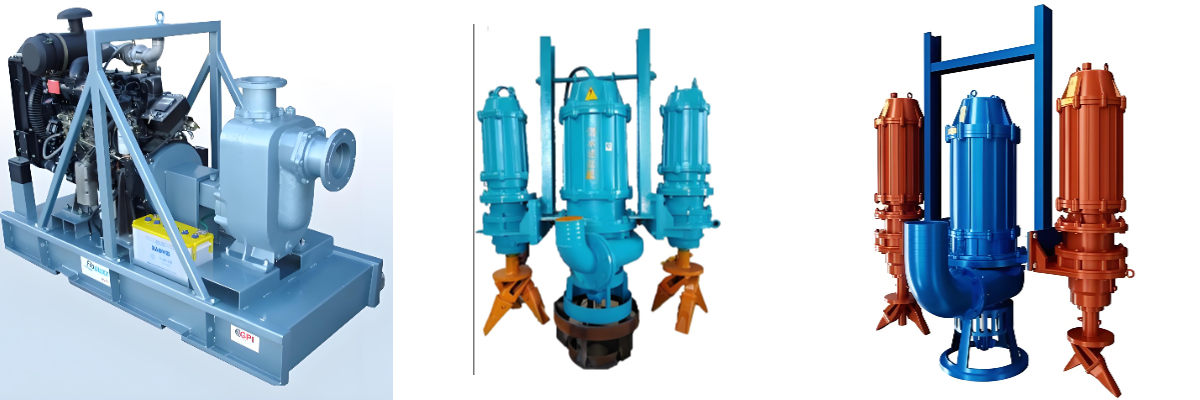

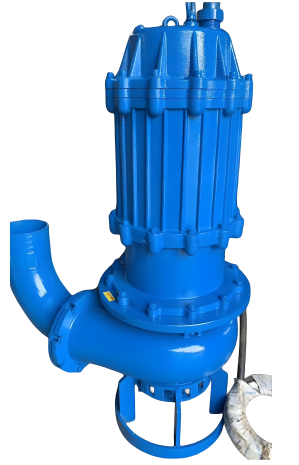
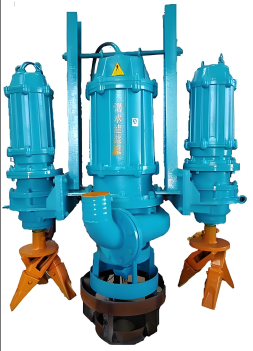
Sand Dredging Pump
The main features of the sand pump include high efficiency, wear resistance, and strong adaptability. It is suitable for natural waters such as rivers, lakes, and seas, as well as engineering scenarios. The following are the specific features:
High efficiency and stability
The sand pump adopts the centrifugal working principle. The impeller rotates at high speed (speed ≥ 750r/min) to generate centrifugal force to achieve efficient transportation. It has a large flow rate and high head. It can transport media containing solid particles, and the hydraulic efficiency is over 60%.
Wear resistance and corrosion resistance
The pump body, impeller and other key components are made of wear-resistant materials such as high manganese ductile iron and high chromium alloy. They are suitable for harsh working conditions such as river dredging and coastal embankment reclamation, and have a long service life.
A sand pump is a power device that transports highly abrasive media such as yellow sand, mineral sand, and tailings slurry. It belongs to the category of centrifugal mud pumps and is widely used in river dredging, land reclamation, industrial and mining tailings processing, and gold mining operations. It is mainly driven by an electric motor or a diesel engine. It can transport solid-liquid mixtures with a concentration of up to 60%, a maximum mixed flow rate of 5,000 cubic meters per hour, and a pumping depth of up to 30 meters underwater. It has the characteristics of high efficiency, wear resistance, and high head [1]. The equipment is divided into horizontal, vertical, and submersible types according to its structure. The horizontal pump adopts a centrifugal design, and the flow-through parts can be made of cast iron or alloy. It is suitable for inland and coastal sediment transportation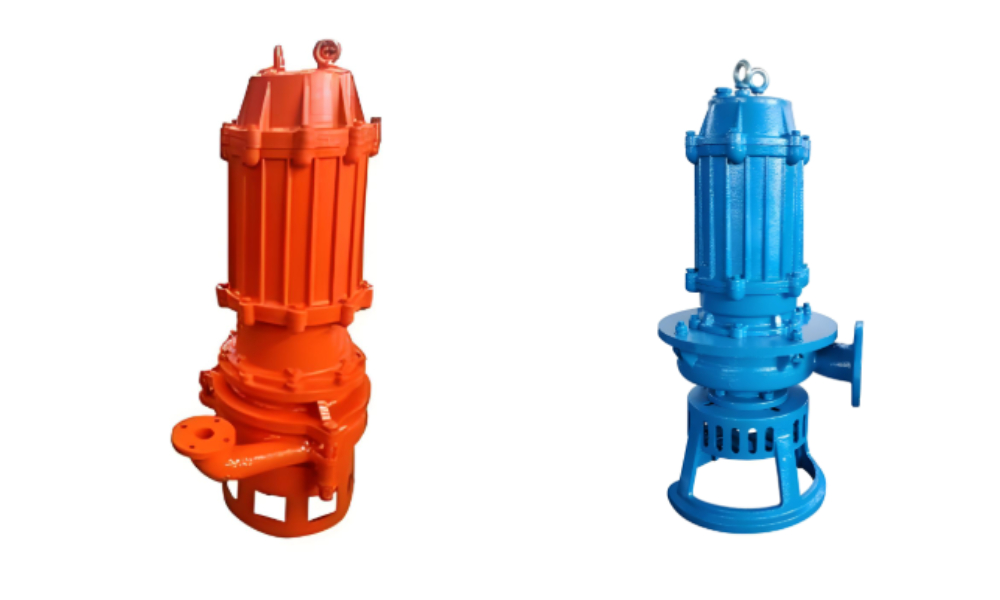 [1]; the vertical pump is often used with a high-pressure clean water pump for dredging of water conservancy projects and supports long-distance pipeline transportation; the motor of the submersible pump is coaxial with the pump body and is equipped with a high-pressure sealing device, which can extract large particles of sediment. The wear-resistant type is made of high-chromium alloy or chromium 26 alloy, which is suitable for high-concentration slurry; the non-metallic wear-resistant type is made of lightweight materials and is specially designed for silty sand. The main components include pump body, impeller and guard plate. During maintenance, attention should be paid to the adjustment of impeller clearance and bearing lubrication cycle.